
Climb high enough in the Presidential Range and the forest gives out. Above it lies an open world of rock, sedge, and tiny flowering plants, more like northern Canada or Greenland than New England.
The cold, the wind, the short growing season, and the thin, rocky soil keep trees from growing on the high ridges. Plants that survive here are mostly arctic species, left behind on the mountaintops when the glaciers retreated at the end of the last ice age. More than a hundred species of alpine plants grow in the zone, and a few grow almost nowhere else on Earth.
Treeline and krummholz
There is no single treeline elevation. In the Presidential Range it generally falls between about 4,000 and 5,000 feet, lower on exposed ridges and higher in sheltered spots. Along the way is a band of krummholz, German for "crooked wood": balsam fir and black spruce stunted into dense, knee-high mats, or shaped into "flag" trees whose branches all point downwind.
Plants of the alpine zone
Alpine plants bloom fast, in a short window from late May to July, before the snow returns. Many grow in low cushions or mats to stay out of the wind and hold heat.



Robbins' cinquefoil: a comeback story
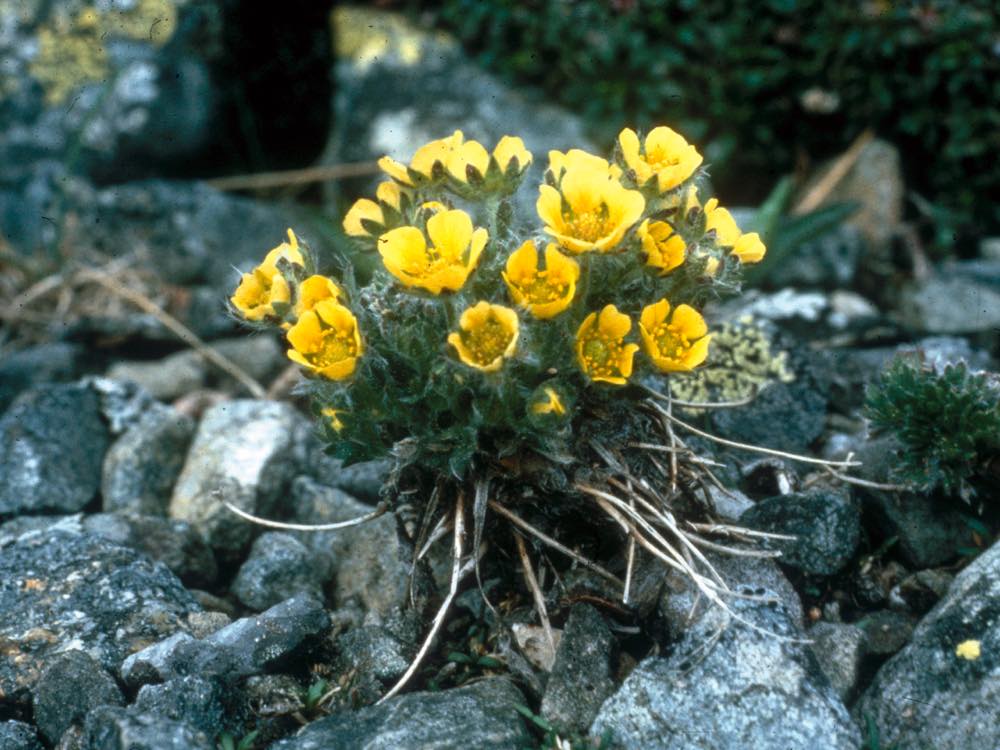
This tiny yellow-flowered plant grows only above treeline in the White Mountains. The entire world population lives within the White Mountain National Forest, much of it close to the historic Crawford Path.
Trampling and collecting pushed it toward extinction. It was protected under the Endangered Species Act in 1980, when only about 3,700 plants were known. Trails were rerouted away from its habitat, the main population was fenced off, and hikers were taught to stay on the path. By August 2002, the population had grown to more than 14,000 plants, and it was removed from the endangered species list because it had recovered.
White Mountain avens
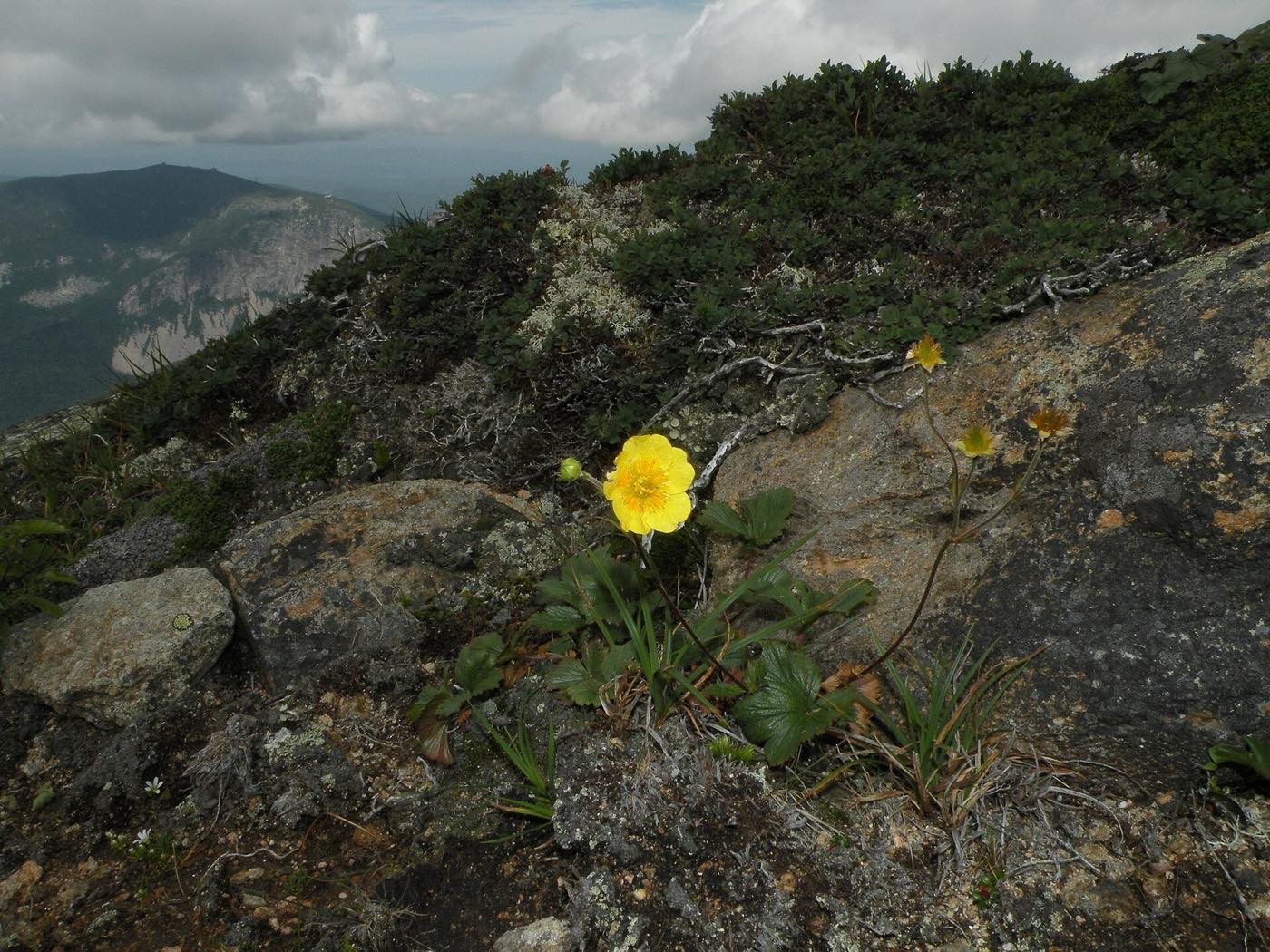
This bright yellow flower grows in just two places in the world: the White Mountains of New Hampshire and a few coastal sites in Nova Scotia. It is named for the naturalist William Dandridge Peck, who first collected it on Mount Washington in 1804. It grows in wet, rocky spots such as streamsides and snowfields, and it is still vulnerable to trampling.
Diapensia
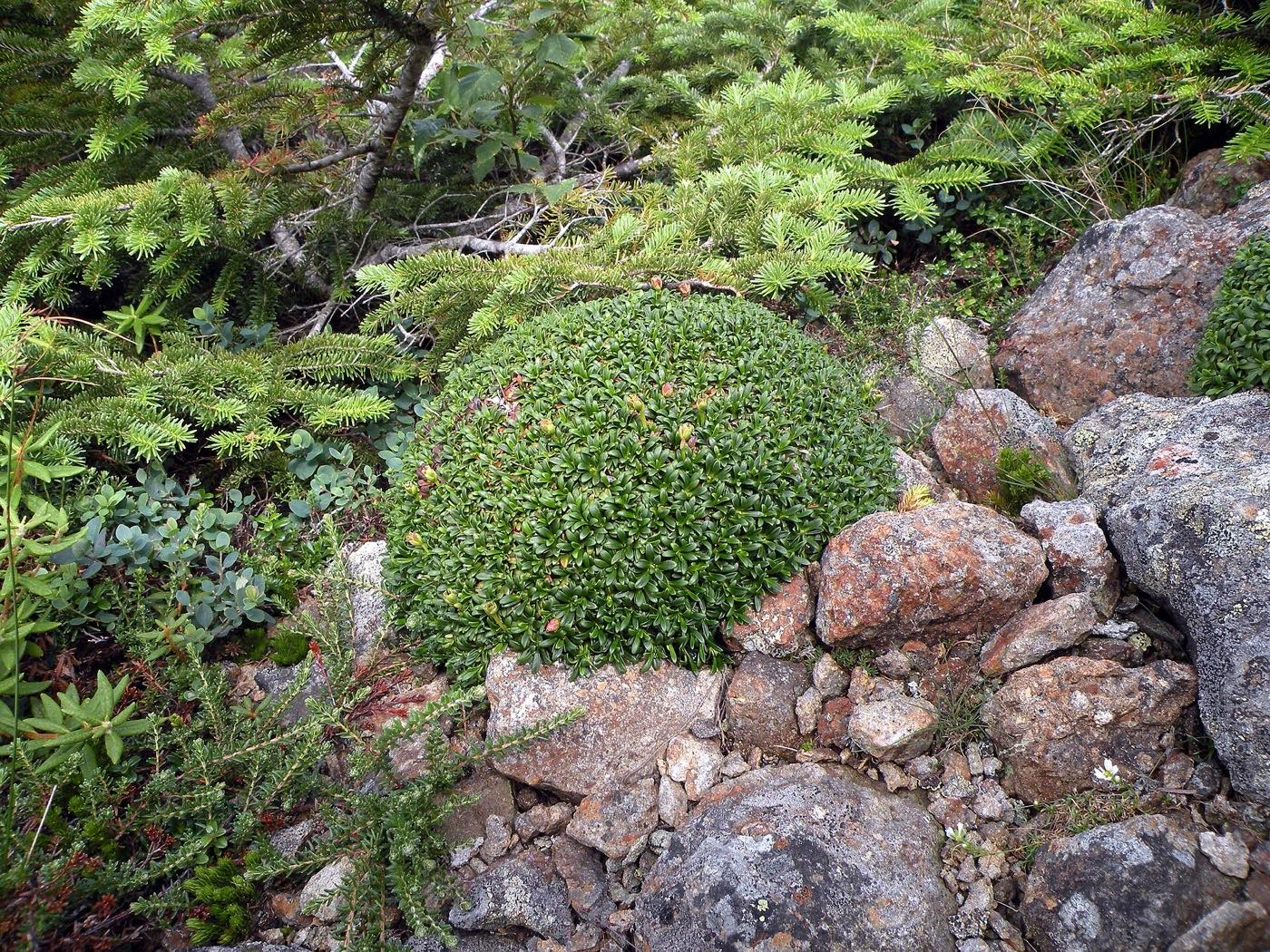
A classic arctic plant that grows in tight, hard cushions, diapensia is one of the first alpine flowers to bloom each spring, covering the ridges with small white blossoms. It is found across the far north of the globe, from Scandinavia to Greenland, and in New England it lives near the southern edge of its range.
The White Mountain fritillary
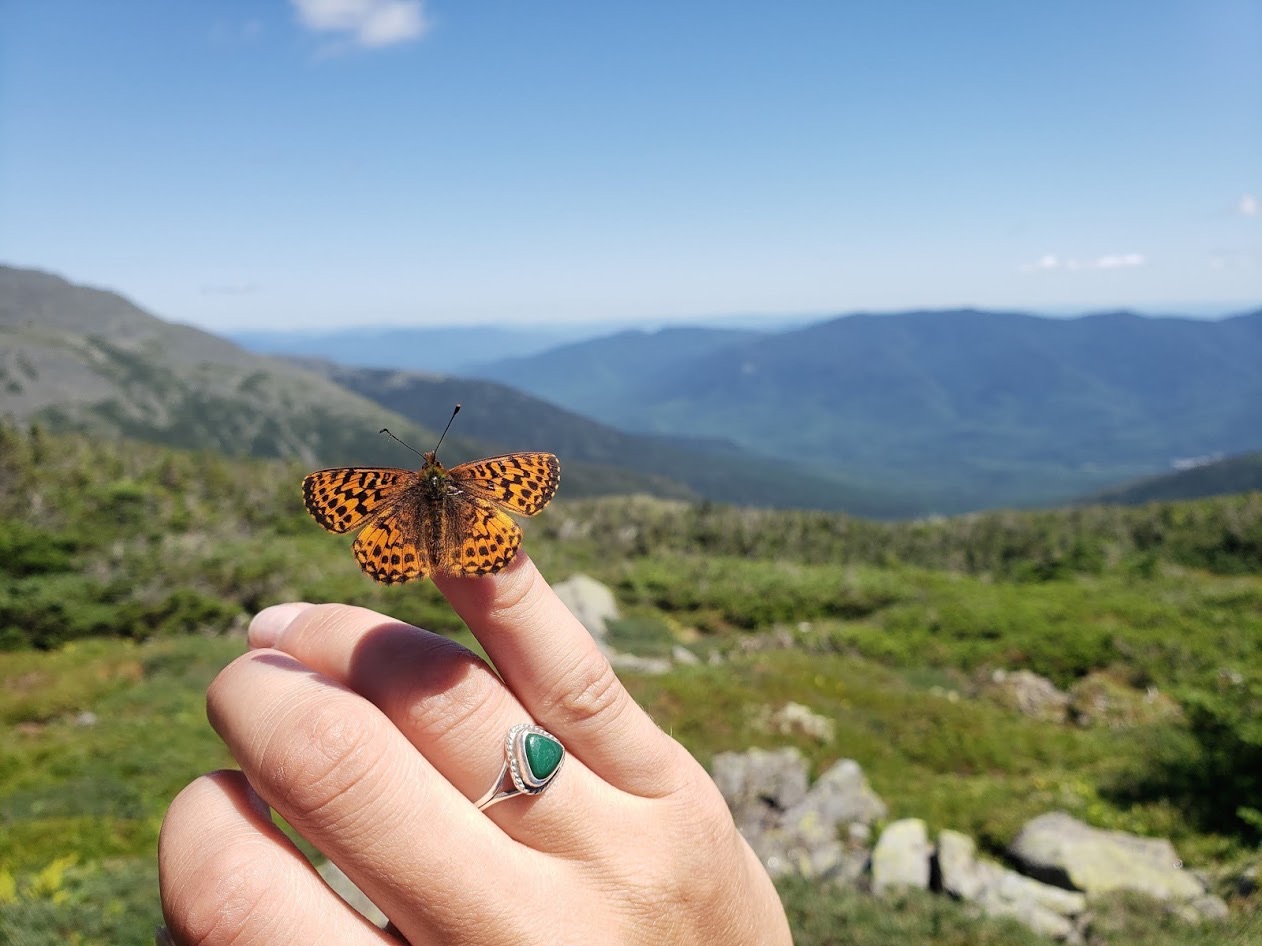
The alpine zone has its own animals too. The White Mountain fritillary is a small orange-and-black butterfly found in the alpine meadows of the White Mountains, where its population has been isolated from its relatives far to the north since the last ice age. Biologists from the U.S. Fish and Wildlife Service and its partners study it in the Presidential Range.
Look for it on sunny summer days in the sedge meadows above treeline.
Protecting the alpine zone
Alpine plants grow slowly. A single boot print on a cushion of diapensia can damage plants that took decades to grow, and the thin soil washes away once its cover is gone.
- Stay on the trail, or walk on bare rock if you have to step aside.
- Follow the cairns, the stacked rock piles that mark the route above treeline, and don't build new ones.
- Leave flowers where they grow, and take photos instead.
- Respect closures and fencing, which protect plants like Robbins' cinquefoil.
For the best wildflower displays, visit in June, and see the Hiking page for routes above treeline.