
The high ridge of the Presidential Range runs about 19 miles, and most of it is above treeline. Hikers who cross every major summit in one trip, the Presidential Traverse, gain more than 8,500 feet along the way.
The peaks were named in stages. Mount Washington got its name in 1784, and several neighbors were named for presidents on a single expedition in 1820. Later names honored statesmen, a geologist, and eventually two 20th-century presidents. The peaks are listed below from northeast to southwest.
Heights follow the Appalachian Mountain Club's list of New Hampshire 4,000-footers where available. Published figures can differ by a few feet between surveys.
| Peak | Height | Named for |
|---|---|---|
| Mount Madison | 5,367 ft | James Madison, 4th president |
| Mount Adams | 5,774 ft | John Adams, 2nd president |
| Mount Jefferson | 5,712 ft | Thomas Jefferson, 3rd president |
| Mount Clay | 5,533 ft | Henry Clay, statesman |
| Mount Washington | 6,288 ft | George Washington, 1st president |
| Mount Monroe | 5,384 ft | James Monroe, 5th president |
| Mount Franklin | 5,000+ ft | Benjamin Franklin |
| Mount Eisenhower | 4,780 ft | Dwight D. Eisenhower, 34th president |
| Mount Pierce | 4,310 ft | Franklin Pierce, 14th president |
| Mount Jackson | 4,052 ft | Charles Thomas Jackson, geologist |
| Mount Webster | about 3,910 ft | Daniel Webster, statesman |
The northern peaks
Mount Madison · 5,367 ft
The northeastern end of the high ridge, named for James Madison, the fourth president. The Appalachian Trail passes just below its summit on the Osgood Trail. The AMC's Madison Spring Hut sits in the col between Madison and Mount Adams, and is the usual starting point for climbing both peaks.
Mount Adams · 5,774 ft
The second-highest peak in the range, named for John Adams on July 31, 1820. Adams is a cluster of summits, and its subpeaks keep the family theme: Mount Sam Adams for his cousin Samuel Adams, Mount Quincy Adams for his son, President John Quincy Adams, and a minor summit named for his wife, Abigail Adams.
On the north side lies King Ravine, a rugged glacial cirque, and four cabins run by the Randolph Mountain Club. The Air Line, about 4.3 miles with roughly 4,500 feet of climbing, is considered the standard winter route. Its last 1,000 feet are very exposed. Some surveys give Adams's height as 5,793 feet.
Mount Jefferson · 5,712 ft
Named for Thomas Jefferson and the third-highest mountain in New Hampshire. Two long ridges lead to the top, the Ridge of the Caps and Castle Ridge, and three glacial cirques surround it: Jefferson Ravine, Castle Ravine, and the Great Gulf. Just below the rocky summit cone is Monticello Lawn, a broad expanse of alpine sedge and rush.
Mount Clay · 5,533 ft
Named for Henry Clay, the Kentucky senator and Secretary of State. Clay is really a long shoulder on the rim of the Great Gulf, rising only about 150 feet above the ridge that connects it to Mount Washington. That is not enough to count as a separate 4,000-footer. In 2003 the New Hampshire Legislature passed a law renaming it Mount Reagan, after President Ronald Reagan, but federal maps still call it Mount Clay.
Mount Washington · 6,288 ft
The highest peak in the Northeast, named in 1784 for George Washington, then a general. It has its own page.
The southern peaks
Mount Monroe · 5,384 ft
Named for James Monroe, the fifth president. The two small Lakes of the Clouds, and the AMC hut named for them, sit in the col between Monroe and Mount Washington. The Appalachian Trail skirts its summit, and the most direct way up is the Ammonoosuc Ravine Trail from the west.
Mount Franklin · 5,000+ ft
Named for Benjamin Franklin, who was never president. Franklin rises only about 25 feet above the ridge, so it is more of a broad shoulder than a separate summit. The Appalachian Trail crosses it, and the Dry River Wilderness drops away to the southeast.
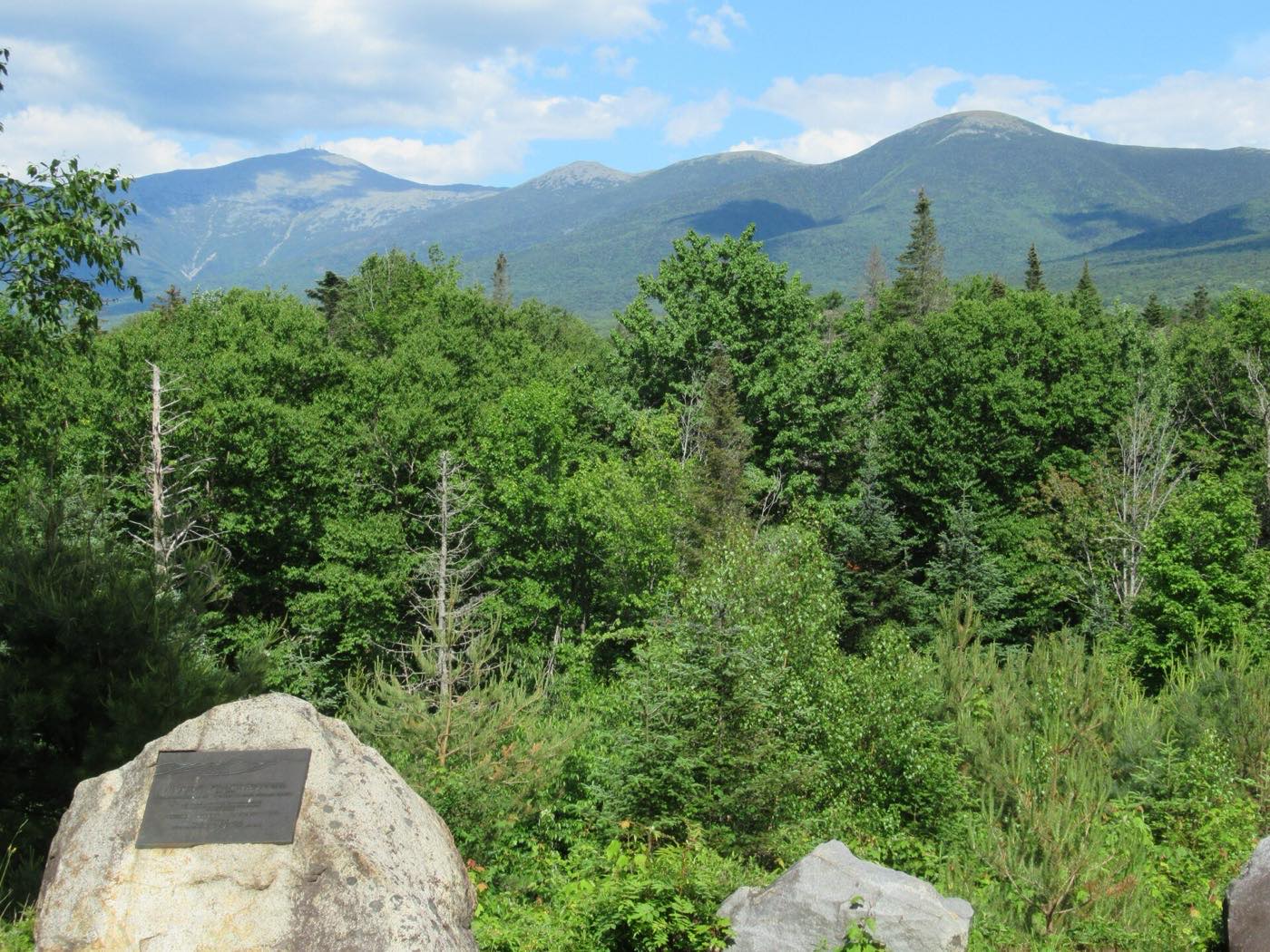
Mount Eisenhower · 4,780 ft
Known for most of its history as Mount Pleasant. The New Hampshire Legislature voted in 1969 to rename it for President Dwight D. Eisenhower, and the U.S. Board on Geographic Names agreed in 1970. Its bald, rounded summit has a 360-degree view. The Crawford Path skirts the summit, with a short loop trail to the top.
Mount Pierce · 4,310 ft
Named for Franklin Pierce, the only president born in New Hampshire. It was originally Mount Clinton, after DeWitt Clinton, the New York governor behind the Erie Canal. The name changed in 1913, though it took decades for the new name to catch on. The AMC's Mizpah Spring Hut is just below the summit, and the historic Crawford Path offers the shortest route up.
Mount Jackson · 4,052 ft
Not named for Andrew Jackson. The mountain honors Charles Thomas Jackson, New Hampshire's state geologist in the 19th century. The Appalachian Trail crosses its summit.
Mount Webster · about 3,910 ft
The southwestern end of the range, once called Notch Mountain and later named for Daniel Webster (1782–1852), the New Hampshire-born senator and orator. Its cliffs drop steeply into Crawford Notch, facing Mount Willey on the other side. The Appalachian Trail runs along its ridge.