Life on the Mountain

From maple forest to arctic tundra in a single day’s climb.

Alpine sedge meadow, about 4,950 ft, in the fall. Photo: Ted Hall

Climbing Mount Washington is like traveling far into northern Canada. In a few hours you pass from the hardwood forests of New England through the evergreen forest of Canada to a tundra much like northern Labrador’s.

Each band of the mountain has its own plants and animals, and a few of them live nowhere else on Earth. Below is a guide to the zones from bottom to top, with 21 species worth knowing, where to look for them, and how to see them without harming them. The Alpine Zone page has more about the plants above treeline.

Life zones on Mount Washington by elevation A profile of Mount Washington along the Auto Road, from 1,600 feet at the base to the 6,288-foot summit, with five bands: northern hardwood forest below about 2,500 feet, spruce-fir forest to about 4,000 feet, krummholz and treeline to about 5,000 feet, alpine meadows to about 5,500 feet, and the summit cone above. 2,000 ft 3,000 ft 4,000 ft 5,000 ft 6,000 ft Northern hardwood forestBelow 2,500 ft Spruce-fir forest2,500 to 4,000 ft Krummholz and treeline4,000 to 5,000 ft Alpine meadows5,000 to 5,500 ft The summit cone5,500 to 6,288 ft Auto Road base, 1,600 ft Mile 4, about 4,000 ft Alpine Garden, about 5,300 ft Summit, 6,288 ft The Auto Road, base to summit: 7.6 miles
Life zones by elevation, drawn on the profile of the Auto Road. Boundaries are approximate: zones reach higher in sheltered valleys and lower on exposed ridges. Click a zone to jump to it.

Northern hardwood forest

Below about 2,500 ft

The trailheads start in a broadleaf forest of sugar maple, American beech, and yellow birch, the same forest that covers much of northern New England. It blazes red and gold in late September and early October.

Where to see it: Pinkham Notch (2,032 ft), the base of the Auto Road, and the lower Ammonoosuc Ravine Trail.

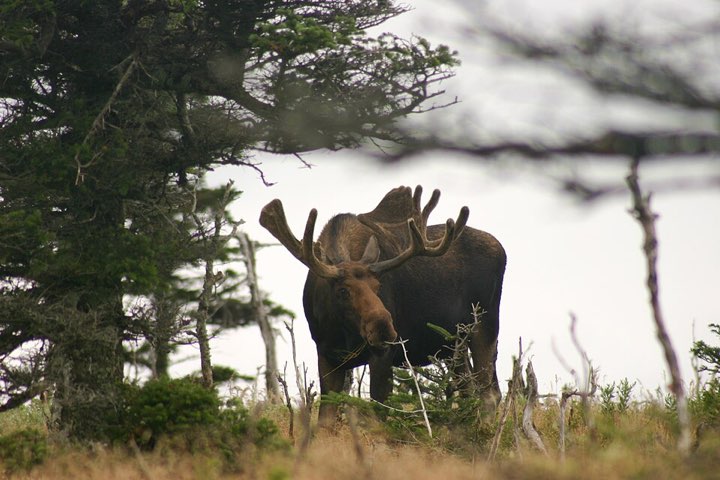
A bull moose with velvet antlers standing among stunted spruce trees

Moose Alces alces

Mammal

The largest animal in the White Mountains: a bull can stand more than six feet tall at the shoulder. Moose wander through every zone, even above treeline, but spend most of their time in wet lowlands, where they wade into ponds to eat water plants.

Look for it: Drive Route 16 through Pinkham Notch slowly at dawn and dusk, when moose often stand in the road. On foot, give them plenty of room. A moose that lays its ears back is about to charge.

Moose on Wikipedia

Photo: Martin Cathrae, CC BY-SA 2.0, resized.
Spruce-fir forest

About 2,500 to 4,000 ft

As the soil thins and the air cools, the hardwoods give way to a dark, dense forest of red spruce and balsam fir, with paper birch in the gaps. It is a slice of the boreal forest that stretches across Canada, and the forest floor is a deep carpet of moss, wood sorrel, and bunchberry.

Where to see it: The middle sections of almost every trail up the range, such as the Tuckerman Ravine Trail below Hermit Lake and the Valley Way.

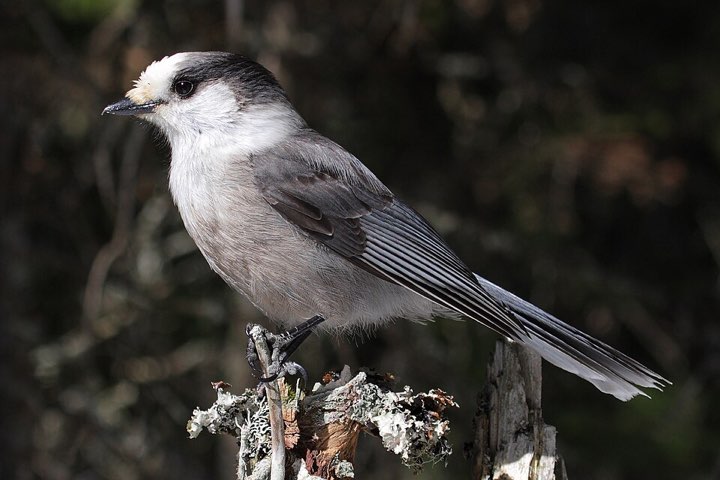
A fluffy gray and white Canada jay perched on a lichen-covered branch

Canada jay Perisoreus canadensis

Bird

A bold, fluffy gray jay of the northern forest. It survives the winter by caching thousands of bits of food, glued into bark crevices with sticky saliva, and it nests in late winter while snow still covers the ground.

Look for it: Canada jays often swoop in to investigate hikers at viewpoints. It’s tempting, but don’t feed them: human food isn’t good for them.

Canada jay at All About Birds

Photo: Cephas, CC BY-SA 3.0, resized.

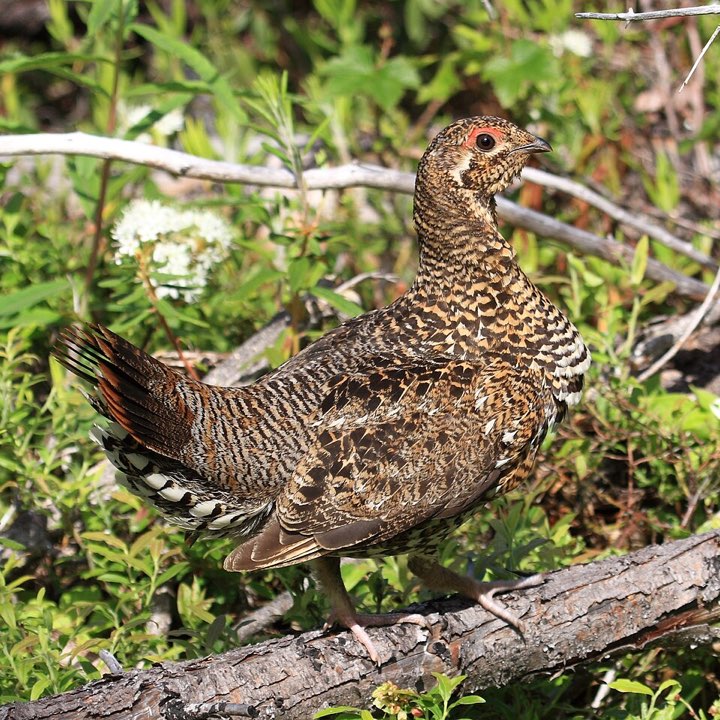
A mottled brown and black spruce grouse with a red comb over its eye, walking through low plants

Spruce grouse Canachites canadensis

Bird

A grouse of the boreal forest that eats mostly conifer needles in winter. It is so tame that it often freezes in place rather than fly away, which earned it the nickname “fool hen.” Males have a red comb above the eye.

Look for it: Watch the trail edges in dense spruce and fir. You’re more likely to find one at your feet than up in a tree.

Spruce grouse at All About Birds

Photo: Cephas, CC BY-SA 3.0, resized.

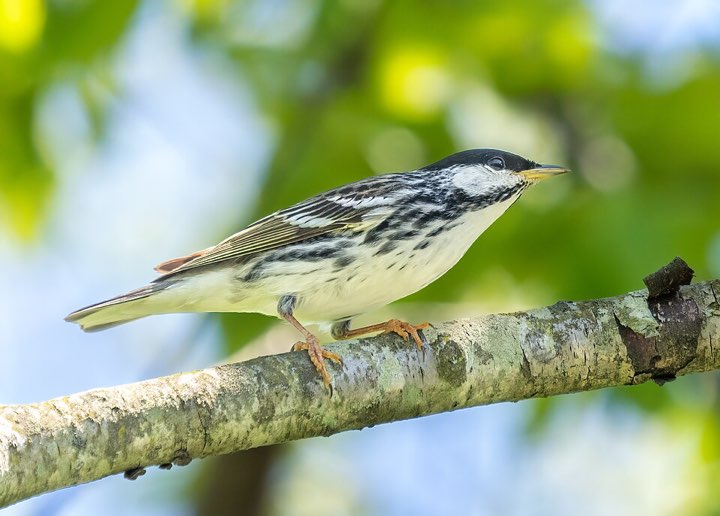
A black-and-white streaked blackpoll warbler with a black cap, perched on a branch

Blackpoll warbler Setophaga striata

Bird

A tiny black-and-white warbler that nests in high spruce-fir forest. Its fall migration is one of the most extreme in the bird world: many fly nonstop over the Atlantic Ocean from the Northeast to South America, a trip of about three days.

Look for it: Listen in June and July for a very high, thin, rapid “tsit-tsit-tsit” from the treetops.

Blackpoll warbler at All About Birds

Photo: Rhododendrites, CC BY-SA 4.0, resized.

Krummholz and treeline

About 4,000 to 5,000 ft

Wind, ice, and cold stunt the trees into krummholz, German for “crooked wood”: balsam fir and black spruce only knee- to head-high but often many decades old, matted so thickly you could almost walk on top of them. Treeline is lower on exposed ridges and higher in sheltered spots. See the Alpine Zone page for more.

Where to see it: Lion Head, the top of the Ammonoosuc Ravine Trail, and the Auto Road around mile 4.

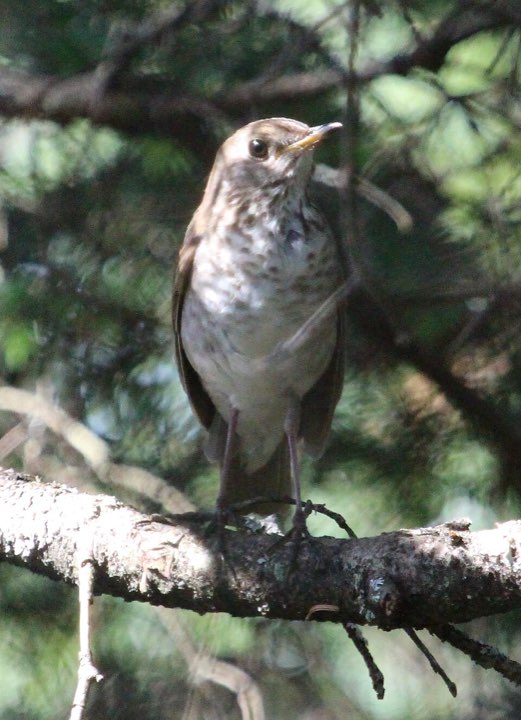
A brown-backed thrush with a spotted breast perched on a spruce branch

Bicknell’s thrush Catharus bicknelli

Bird Rare

One of the rarest songbirds in the Northeast. It nests only in dense, stunted fir and spruce near mountaintops in the Northeast and eastern Canada, and winters mostly on the island of Hispaniola in the Caribbean. The White Mountains hold about a third of its breeding habitat in the United States.

Look for it: You’ll almost certainly hear one before you see one. Listen at dawn and dusk in June for a thin, flute-like song that spirals downward.

Bicknell’s thrush at All About Birds

Photo: Phillip Kenny, CC BY 2.0, resized.

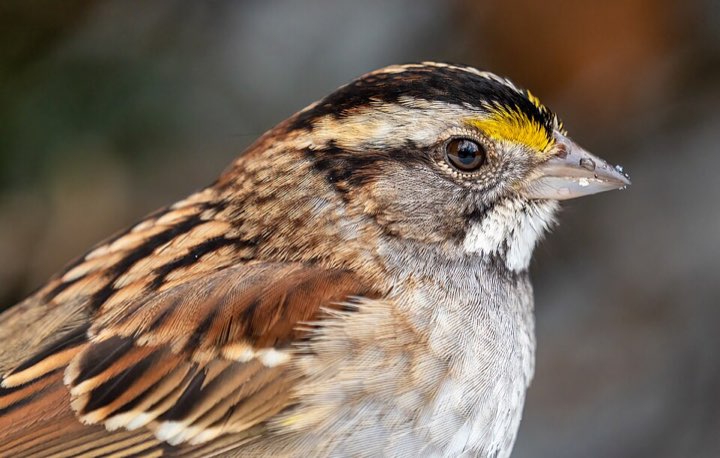
Close-up of a white-throated sparrow with a striped crown, a yellow spot by the eye, and a white throat

White-throated sparrow Zonotrichia albicollis

Bird

Not rare, but it is the sound of treeline in summer. Its clear, whistled song is often written as “Old Sam Peabody, Peabody, Peabody” (or, in Canada, “O sweet Canada, Canada, Canada”).

Look for it: Listen anywhere in the krummholz from late May through July. Look for the white throat and a yellow spot in front of the eye.

White-throated sparrow at All About Birds

Photo: Rhododendrites, CC BY-SA 4.0, resized.

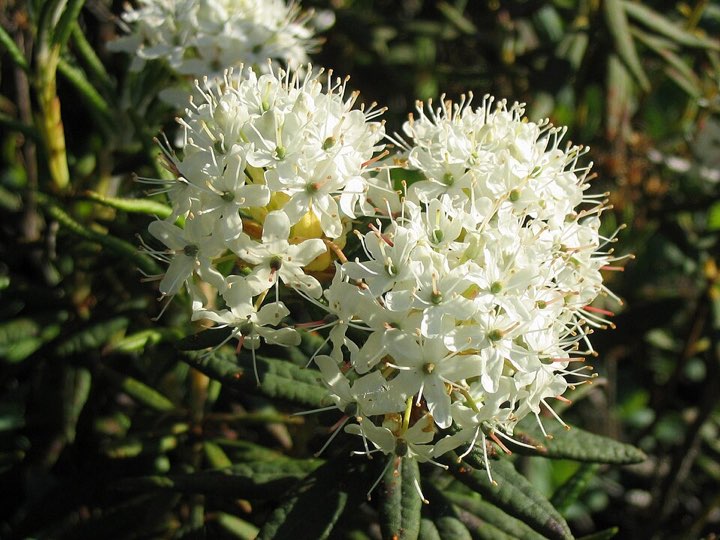
Rounded clusters of small white flowers above narrow evergreen leaves

Labrador tea Rhododendron groenlandicum

Plant

A low evergreen shrub of bogs and treeline, with narrow leathery leaves that are rusty and woolly underneath, and round clusters of white flowers in June. Its leaves were once brewed as a tea, but the plant contains compounds that can be toxic.

Look for it: Turn over a leaf, gently, to see the rust-colored fuzz. Leave it on the plant.

Labrador tea at Go Botany

Photo: Wikimedia Commons contributor, CC BY-SA 3.0, resized.

Alpine meadows and the Alpine Garden

About 5,000 to 5,500 ft

Above the trees, broad shoulders of the range are covered with sedge meadows, heath, and cushion plants. The most famous is the Alpine Garden on Mount Washington’s east side, which bursts into bloom in June. Most of these plants are arctic species, left behind on the summits as the glaciers melted.

Where to see it: The Alpine Garden Trail, which crosses the Auto Road around 5,300 ft, and the Crawford Path near Lakes of the Clouds.

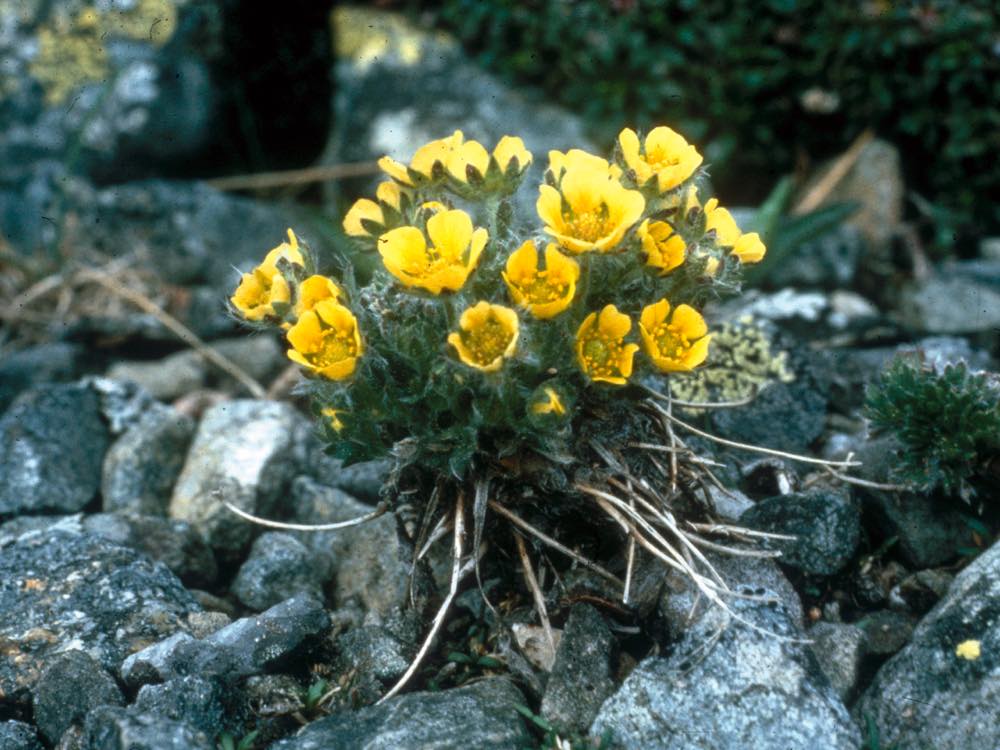
A small cluster of yellow five-petaled flowers growing from a low rosette of leaves among gravel

Robbins’ cinquefoil Potentilla robbinsiana

Plant Found only in the White Mountains

A tiny yellow-flowered plant that grows nowhere else in the world. Trampling and collecting nearly wiped it out, but after its habitat was protected it recovered, and in 2002 it was removed from the federal endangered species list.

Look for it: Its home near Lakes of the Clouds is closed to hikers. Enjoy it from the trail, and read its comeback story.

Robbins’ cinquefoil at Go Botany

USDA Forest Service. Public domain, via Wikimedia Commons.

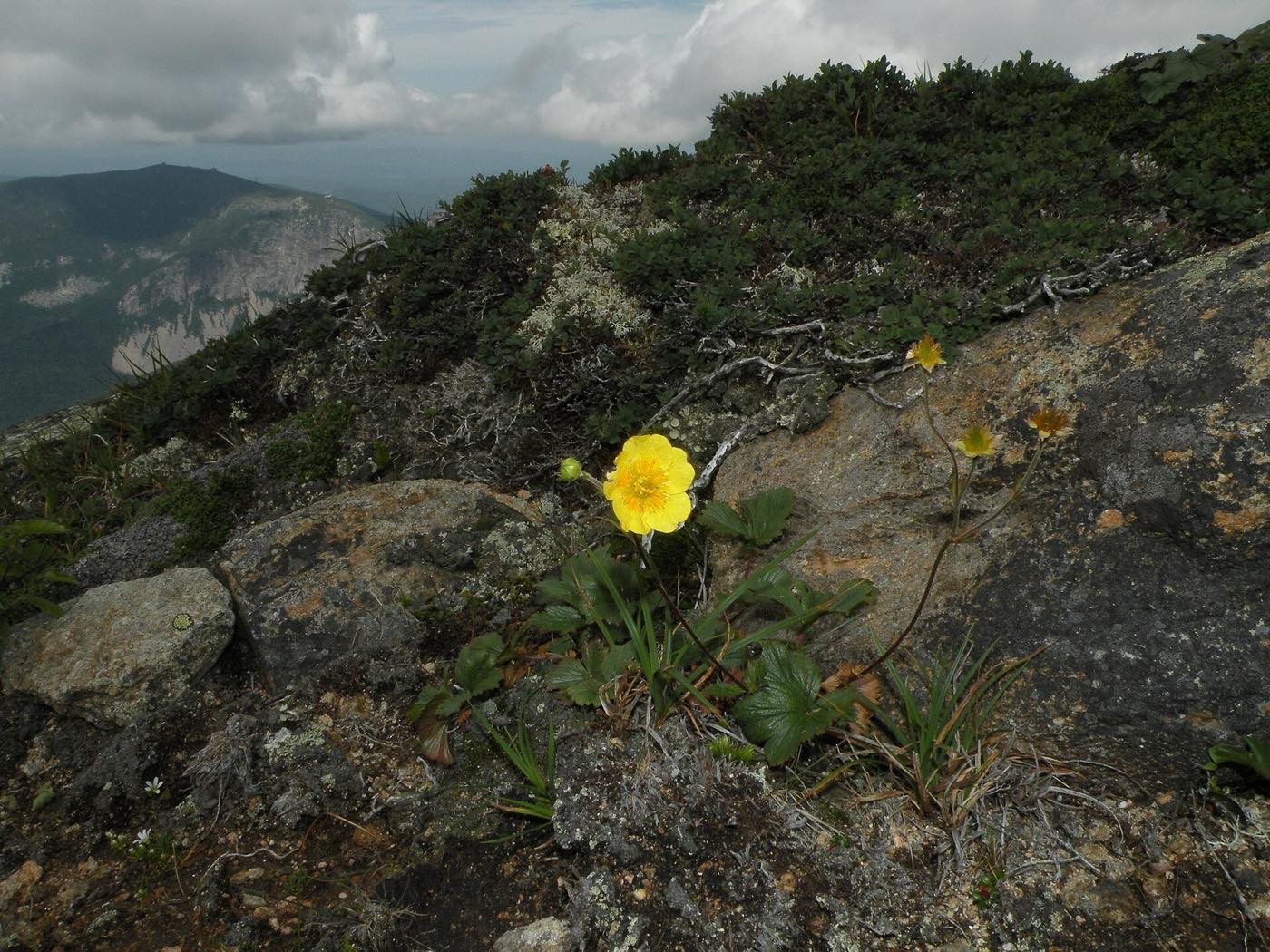
Bright yellow, buttercup-like flowers of White Mountain avens with rounded green leaves

White Mountain avens Geum peckii

Plant Rare

Bright yellow flowers that grow in only two places in the world: the White Mountains and a few spots in Nova Scotia. It likes wet, rocky places such as streamsides and late-melting snowbanks.

Look for it: Look along wet seeps in the Alpine Garden from late June into August.

White Mountain avens at Go Botany

Photo: Doug McGrady, CC BY 2.0, resized.

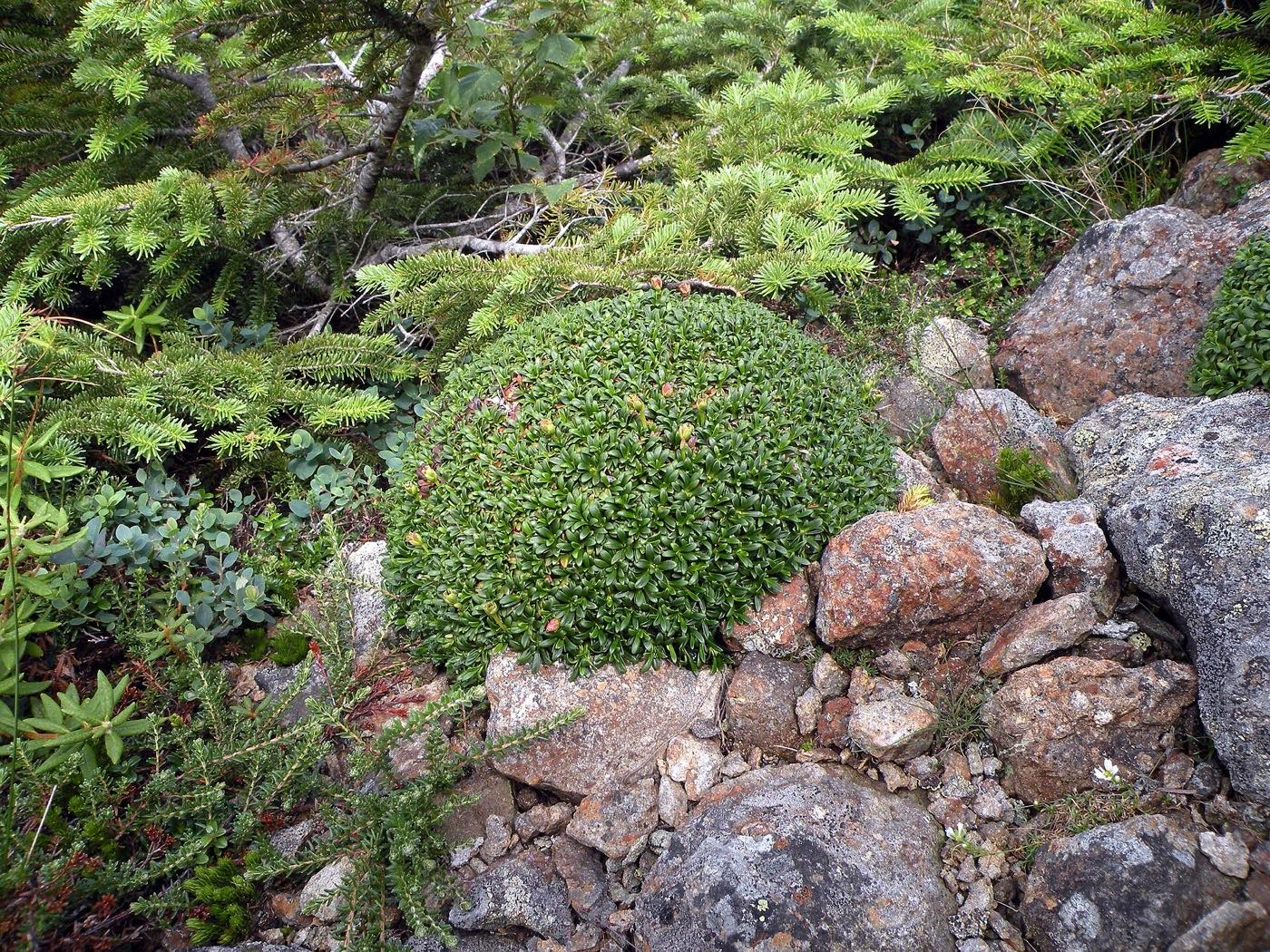
A dense green cushion of diapensia dotted with small white flowers, growing among rocks

Diapensia Diapensia lapponica

Plant

A classic arctic cushion plant: a hard, tight dome of tiny leaves that holds heat and resists the wind. It’s one of the first alpine flowers to bloom each year, covering the ridges with small white blossoms.

Look for it: Look in early to mid June, on exposed, windswept ground. Don’t step on the cushions: they take decades to grow.

Diapensia at Go Botany

Photo: Doug McGrady, CC BY 2.0, resized.

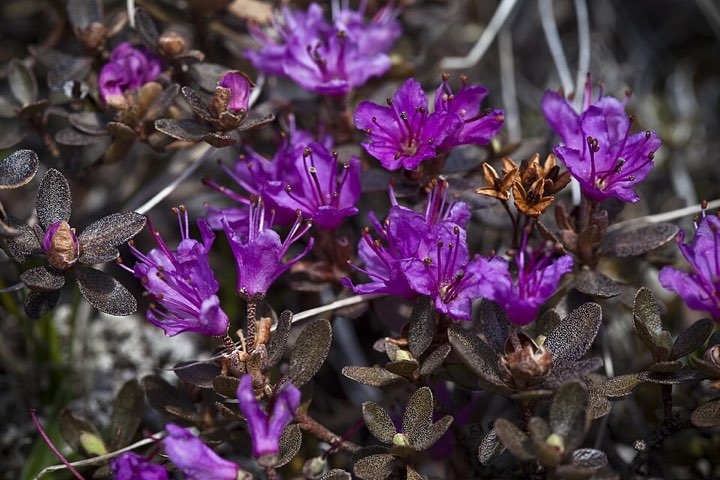
Bright magenta flowers on a low, dark-leaved shrub

Lapland rosebay Rhododendron lapponicum

Plant

A dwarf rhododendron only a few inches tall, with bright magenta flowers. Like most alpine plants here, it is an arctic species at the southern edge of its range.

Look for it: Peak bloom is usually early to mid June, around the same time as diapensia.

Lapland rosebay at Go Botany

Photo: Jacob W. Frank, National Park Service. Public domain.

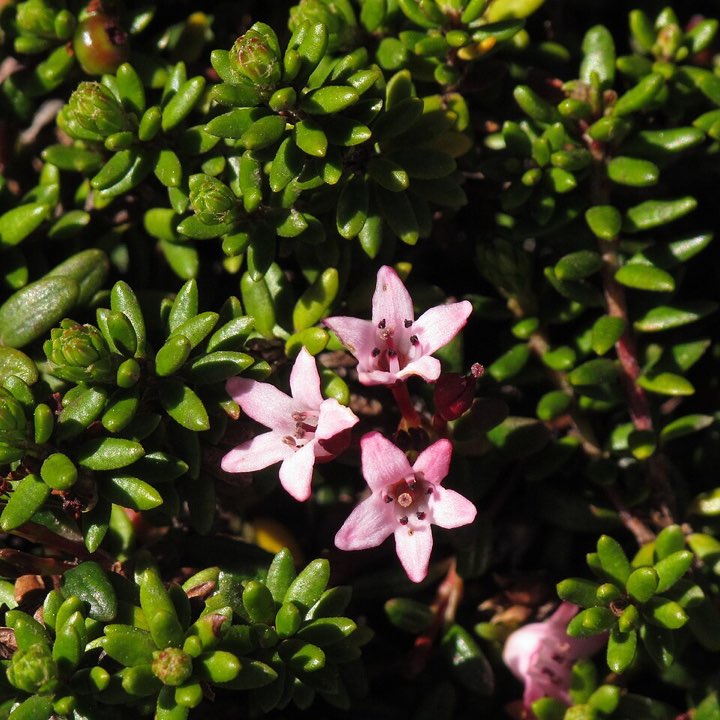
Tiny pink star-shaped flowers among small, glossy green leaves

Alpine azalea Kalmia procumbens

Plant

A creeping mat of tiny evergreen leaves, dotted in June with pink, star-shaped flowers smaller than a fingernail.

Look for it: Kneel down (on the rocks, not the plants) to see the flowers properly.

Alpine azalea at Go Botany

Photo: Robert Flogaus-Faust, CC BY 4.0, resized.

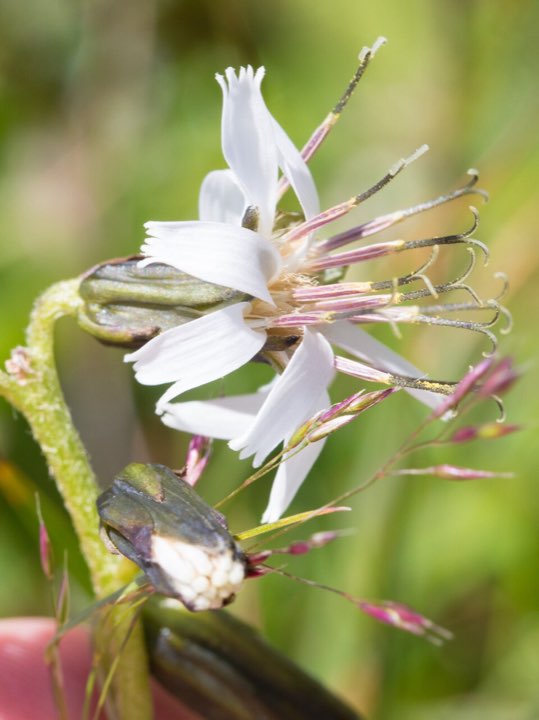
A nodding cream-white flower with long, narrow petals

Boott’s rattlesnake-root Nabalus boottii

Plant NH endangered

A globally rare wildflower found only on a few alpine summits in New England and New York, and much of the world’s population grows around Mount Washington. It was first collected in the White Mountains in 1829.

Look for it: Unlike most alpine flowers, it blooms in late summer. Look for nodding cream-colored flowers in August.

Boott’s rattlesnake-root at Go Botany

Photo: Ken-ichi Ueda (kueda), CC BY 4.0, resized.

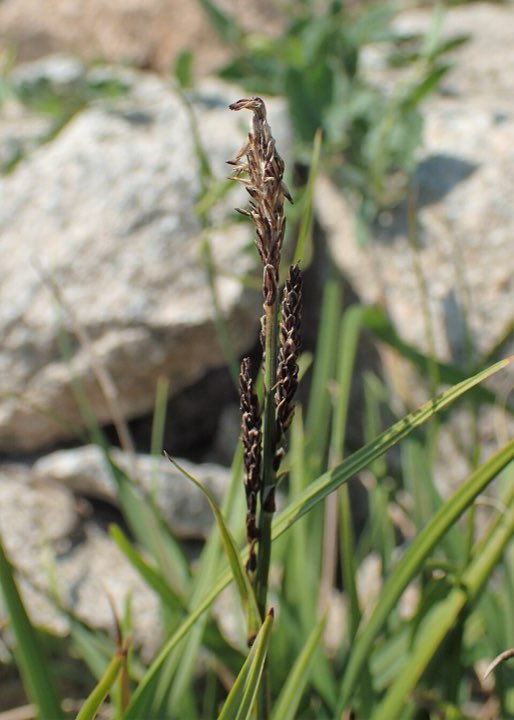
Dark, upright seed spikes of a sedge rising from grassy leaves among rocks

Bigelow’s sedge Carex bigelowii

Plant

The grass-like plant that covers the alpine meadows, turning them gold in the fall. It’s easy to overlook, but it is the only known food for the caterpillars of the White Mountain Arctic butterfly.

Look for it: Look for its dark, upright seed spikes in midsummer.

Bigelow’s sedge at Go Botany

Photo: Krzysztof Ziarnek, Kenraiz, CC BY-SA 4.0, resized.

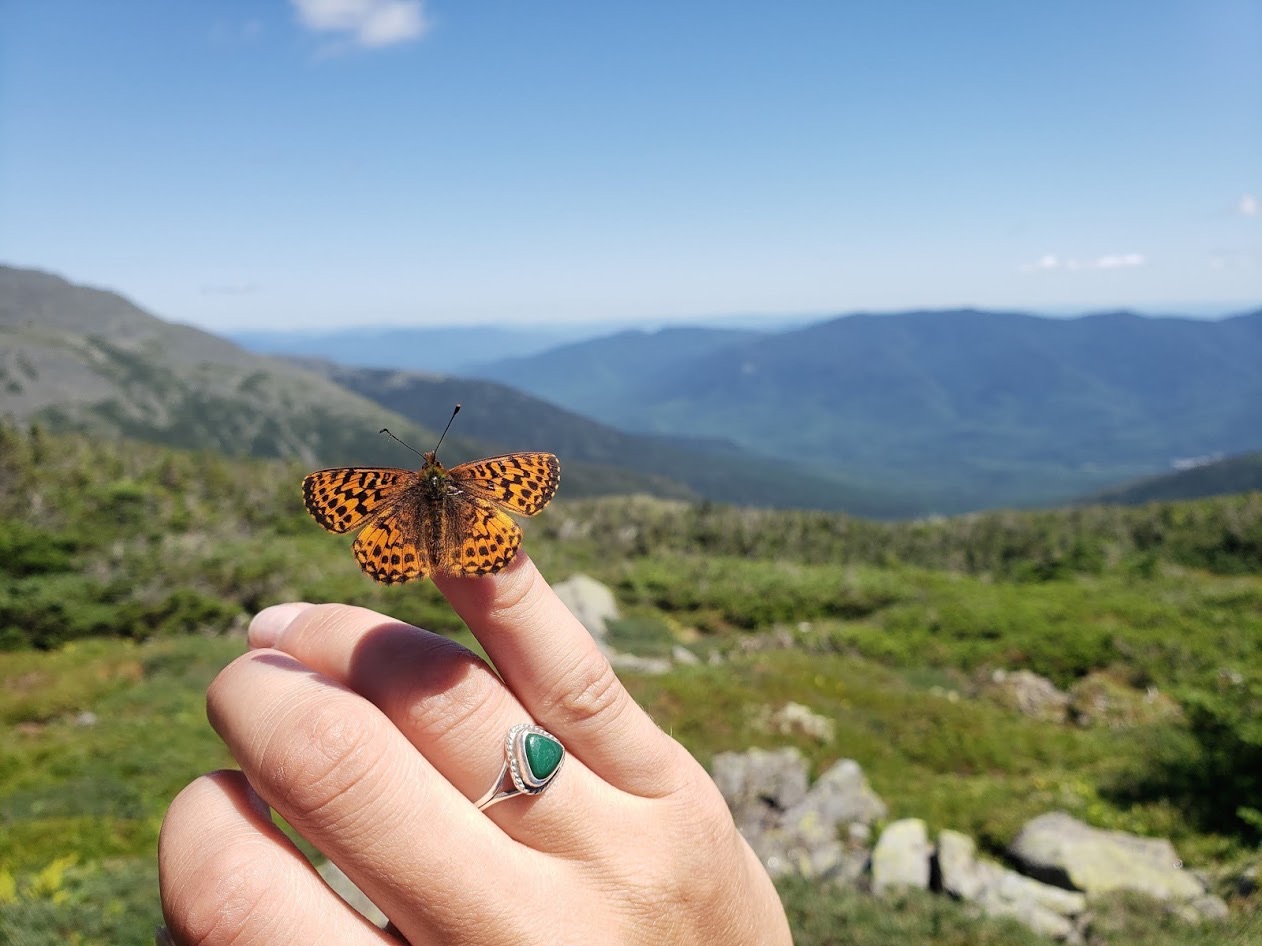
An orange-and-black spotted butterfly perched on a hiker's finger, with the Presidential Range behind it

White Mountain fritillary Boloria chariclea montinus

Butterfly Found only in the Presidential Range

A small orange-and-black butterfly that lives nowhere in the world except the Presidential Range alpine zone, cut off from its relatives to the north since the last ice age. It is listed as endangered in New Hampshire, and after more than 100 years of study, no one knows for sure what its caterpillars eat.

Look for it: Look for it on sunny days in mid to late summer, in the wetter alpine meadows such as the Alpine Garden.

White Mountain fritillary, Vermont Center for Ecostudies

Photo: Samantha Derrenbacher, U.S. Fish and Wildlife Service. Public domain, via fws.gov.

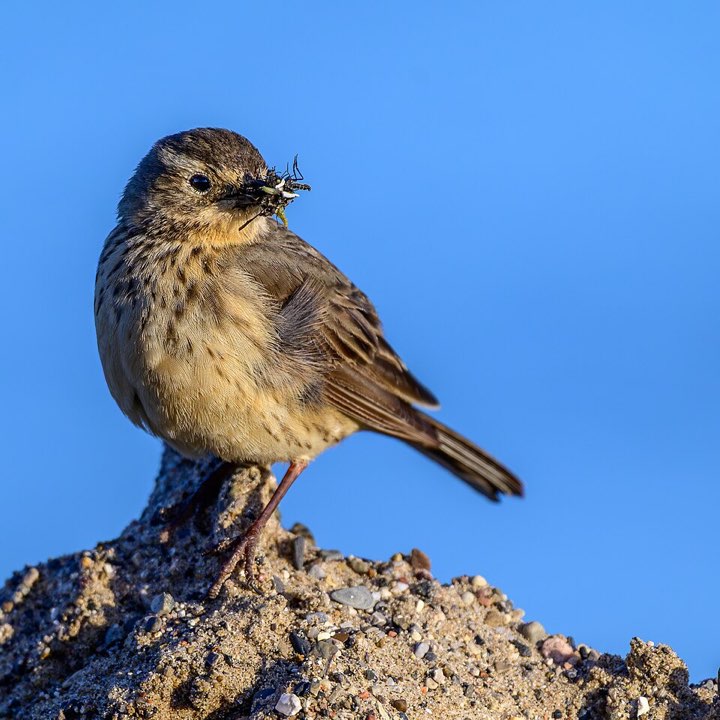
A brown-streaked pipit standing on a rock against a blue sky with insects in its beak

American pipit Anthus rubescens

Bird NH special concern

The only bird in New England that nests only in the alpine zone. East of the Rockies, the only places in the United States where it has been found nesting are Mount Washington and Maine’s Mount Katahdin. It builds its nest on the ground, tucked into the sedge.

Look for it: Watch for a slim brown bird walking on the ground and bobbing its tail, and listen for its flight call, a thin “pip-it.”

American pipit at All About Birds

Photo: Stephan Sprinz, CC BY 4.0, resized.

Rock vole Microtus chrotorrhinus

Mammal

A small vole with a yellowish-orange nose that lives among mossy boulders and talus. It’s rarely seen, but it has a special tie to this mountain: the species was first described to science in 1894 from a specimen collected at the head of Tuckerman Ravine.

Look for it: You’re unlikely to spot one. Listen for rustling in the rocks along the Tuckerman Ravine and Alpine Garden trails.

Rock vole on Wikipedia

The summit cone

About 5,500 to 6,288 ft

The top of Mount Washington is a cone of frost-shattered rock, in cloud most days and battered by hurricane-force winds. Only the toughest plants grow here, in sedge patches and cracks between the rocks, and the rocks themselves are painted with lichens.

Where to see it: The upper Tuckerman Ravine Trail, the Crawford Path above Lakes of the Clouds, and the Gulfside Trail.

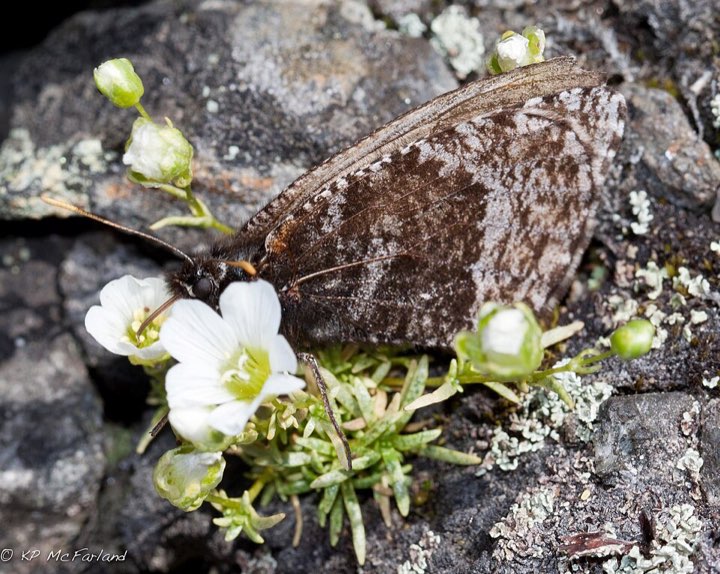
A mottled gray-brown butterfly with closed wings on lichen-covered rock beside small white flowers

White Mountain Arctic Oeneis melissa semidea

Butterfly Found only in the Presidential Range

A mottled gray-brown butterfly found only in the high sedge meadows of the Presidential Range, from about 4,900 feet to near the summit. Its caterpillars eat only Bigelow’s sedge and probably take two years to grow up. New Hampshire lists it as threatened, and its population may be under 1,000.

Look for it: Look from late June into early August on sunny, calm days. When it lands on lichen-covered rock with its wings closed, it all but disappears.

White Mountain Arctic, Vermont Center for Ecostudies

Photo: Kent McFarland, CC0, resized.

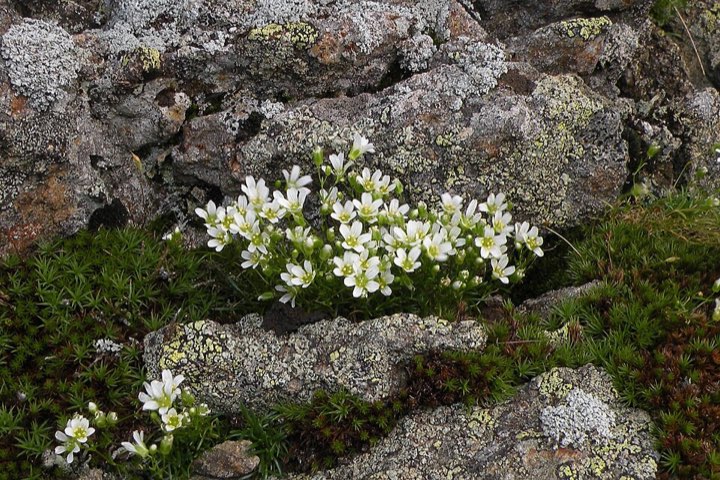
Clusters of small white five-petaled flowers growing in a crack between lichen-covered rocks

Mountain sandwort Minuartia groenlandica

Plant

One of the most common flowers on the summit cone: small white blossoms in tufts in the gravel and cracks between rocks, often right beside the trail.

Look for it: It blooms from June through August, longer than most alpine flowers.

Mountain sandwort at Go Botany

Photo: Doug McGrady, CC BY 2.0, resized.

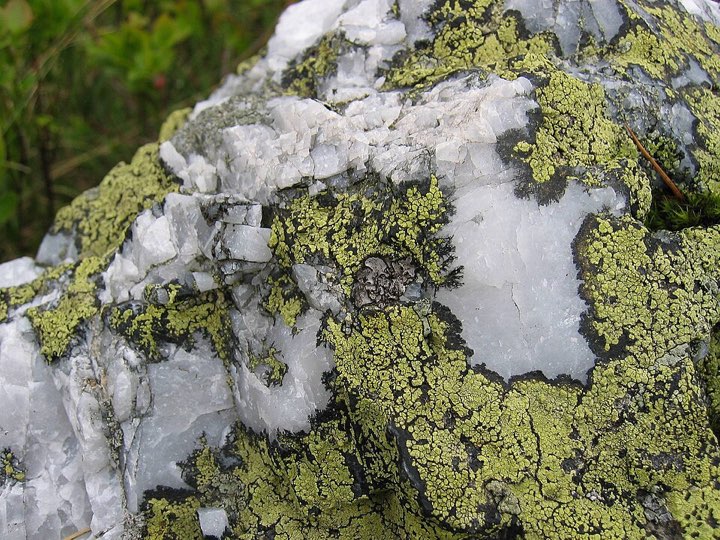
Bright yellow-green lichen with thin black borders spreading in patches across a white rock

Map lichen Rhizocarpon geographicum

Lichen

Bright yellow-green patches outlined in black, like countries on a map. It grows so slowly, a fraction of a millimeter a year, that scientists use the size of its patches to estimate how long a rock surface has been exposed.

Look for it: Look at almost any boulder near the summit. A patch the size of your palm can be a century or more old.

Map lichen on Wikipedia

Photo: User:Tigerente, CC BY-SA 3.0, resized.

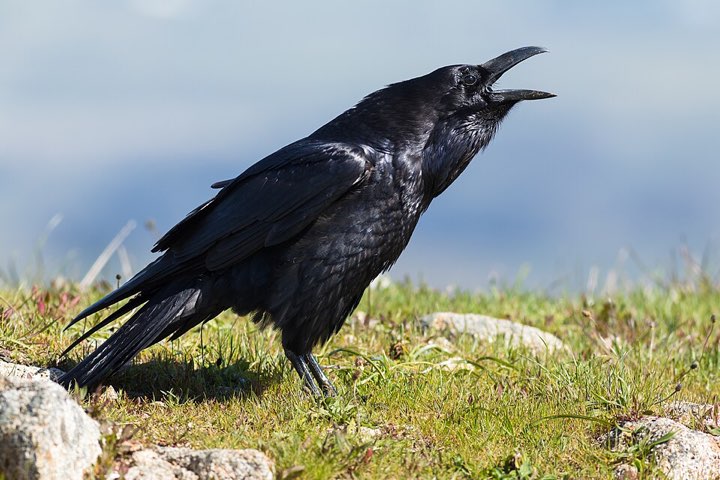
A large black raven with its beak open, calling from a grassy slope

Common raven Corvus corax

Bird

The summit’s most visible resident. Ravens ride the updrafts over the ravines, tumbling and rolling in the wind, apparently just for fun. They are among the most intelligent birds in the world.

Look for it: Listen for a deep, croaking “gronk.” They’re bold around the summit buildings, but don’t feed them.

Common raven at All About Birds

Photo: Frank Schulenburg, CC BY-SA 4.0, resized.

Seeing wildlife without harming it

  • Stay on the trail, or step on bare rock. Alpine plants grow for decades and a single boot can kill them.
  • Don’t feed the jays, ravens, or anything else. Human food makes wild animals sick and bold.
  • Give moose room, at least the length of a few cars, and never get between a cow and her calf.
  • Leave flowers and rocks where they are. Many alpine plants are protected, and rocks shelter voles, caterpillars, and lichens.
  • Share what you see. Photos uploaded to iNaturalist help scientists track rare species, including the White Mountain butterflies.